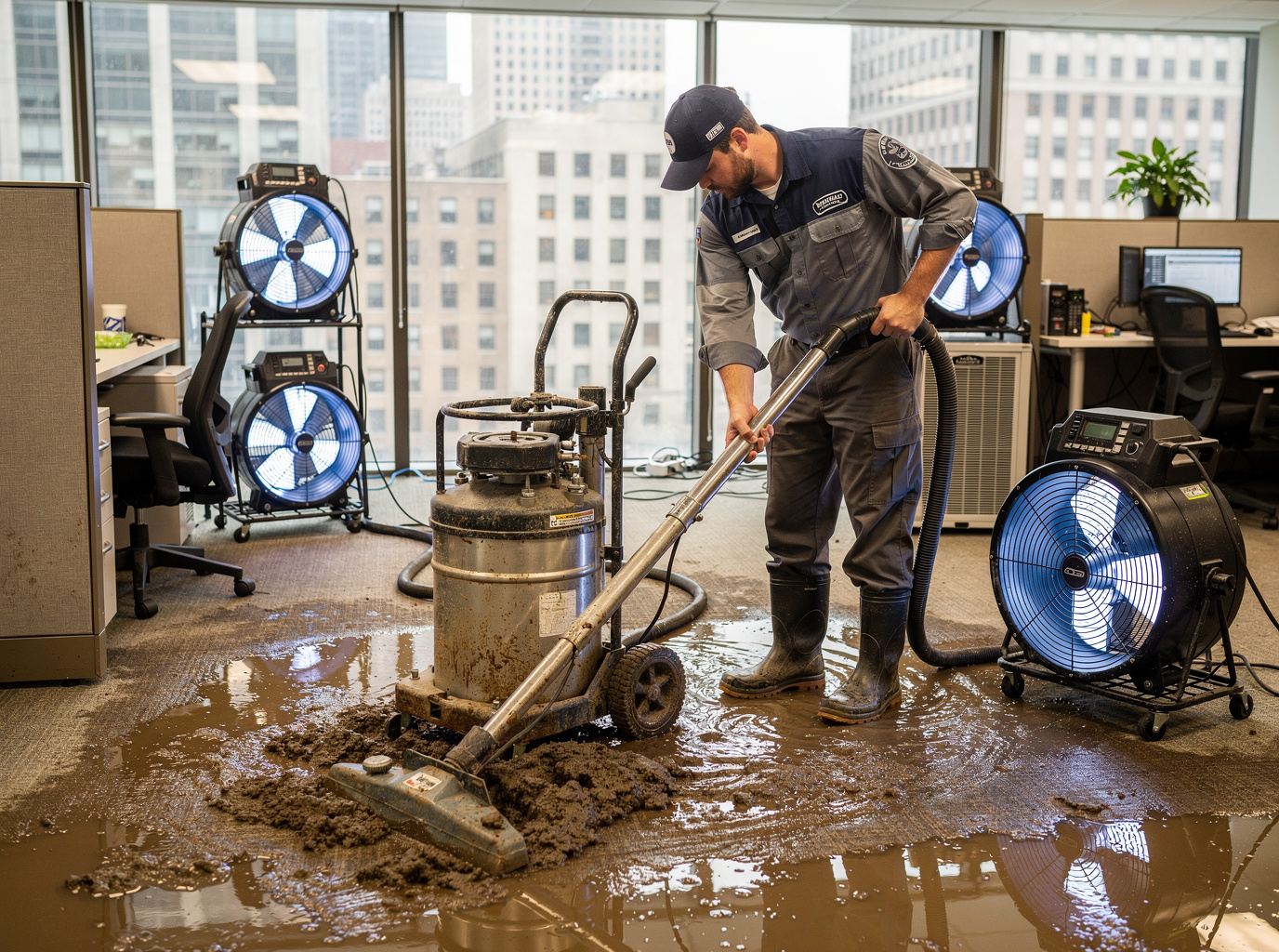
Chicago commercial buildings often date to the early 1900s with brick and terra-cotta construction that traps moisture behind walls and under concrete slabs. In neighborhoods such as the West Loop and South Loop, older cast-iron risers and flat roofs fail during the heavy spring rains that follow our cold winters. Technicians must pull baseboards, use moisture meters on masonry, and run commercial dehumidifiers for days longer than residential jobs because the thermal mass of these structures holds water.
Winter pipe bursts are common when temperatures drop below zero and buildings in Logan Square or Uptown lose heat overnight. Category 3 water from backed-up sewers near the Chicago River requires full containment and HEPA air scrubbing before any reconstruction. Restaurants in Wicker Park face extra steps because grease traps and floor drains complicate extraction and leave hidden contamination under tile.
High-rises near Millennium Park and Navy Pier bring elevator shaft and electrical vault risks that demand coordination with building engineers. Crews document every step for insurance adjusters while keeping ground-floor retail open when possible. Work in these structures routinely involves negative-pressure drying chambers and daily moisture logs to meet Cook County code requirements for commercial occupancy.
Technician insight
In Chicago the thing that catches most people out with Commercial Water Damage Restoration is how quickly water travels through the old limestone foundations and shared walls in buildings from the 1920s in Logan Square and Pilsen. A single winter freeze can send water two floors down and into the neighboring unit before anyone notices.
West Loop Office Pipe Burst
A frozen supply line on the third floor of a 1910 brick building sent water into two tenant suites. Extraction crews removed standing water the same afternoon, then ran industrial drying equipment for five days while keeping the ground-floor retail open. Final moisture readings allowed reconstruction to begin without mold growth or insurance delays.
Commercial Water Damage Restoration Services We Offer
✓Office Building Flood Recovery
Rapid water extraction and drying for multi-tenant offices in the West Loop and South Loop to minimize business interruption.
✓Restaurant Kitchen Water Damage Repair
Removal of contaminated water from grease-laden floors and walls while protecting food-service equipment and meeting health department standards.
✓Retail Space Moisture Restoration
Targeted drying of display areas and stockrooms in Lincoln Park and Wicker Park storefronts to protect inventory and reopen quickly.
✓Warehouse Slab Drying
Industrial extraction and dehumidification under concrete floors in Bridgeport and Pilsen facilities to prevent long-term structural damage.
✓High-Rise Common Area Restoration
Containment and drying of hallways, lobbies and mechanical rooms in buildings near Grant Park and the Chicago Riverwalk.
Commercial Water Damage Restoration Cost in Chicago, IL
| Service | Typical Range | What Affects It |
|---|---|---|
| Small retail extraction and drying | $1,200–$3,500 | Varies with water volume and whether subfloor drying is required |
| Restaurant kitchen restoration | $2,800–$6,500 | Higher when grease and Category 3 water are involved |
| Office suite drying | $1,800–$4,800 | Depends on ceiling height and HVAC involvement |
| Warehouse slab drying | $3,500–$9,000 | Driven by square footage and length of dehumidification |
Ranges are typical for Chicago, IL and confirmed with an exact written quote before any work starts.
How it works
- 1
On-Site Assessment
Technicians inspect the affected commercial space, classify the water, map moisture with meters, and note any structural or electrical concerns.
- 2
Water Extraction
Powerful pumps and wands remove standing water from floors, walls and sub-slabs before hidden pockets can feed mold.
- 3
Drying and Dehumidification
Commercial air movers and desiccant dehumidifiers run until moisture readings meet industry drying standards for the building materials present.
- 4
Restoration and Documentation
Replace damaged drywall, flooring and fixtures, then provide detailed logs for insurance and code compliance.
Pricing
Upfront written quotes after inspection; final cost depends on water category, square footage, and drying duration.