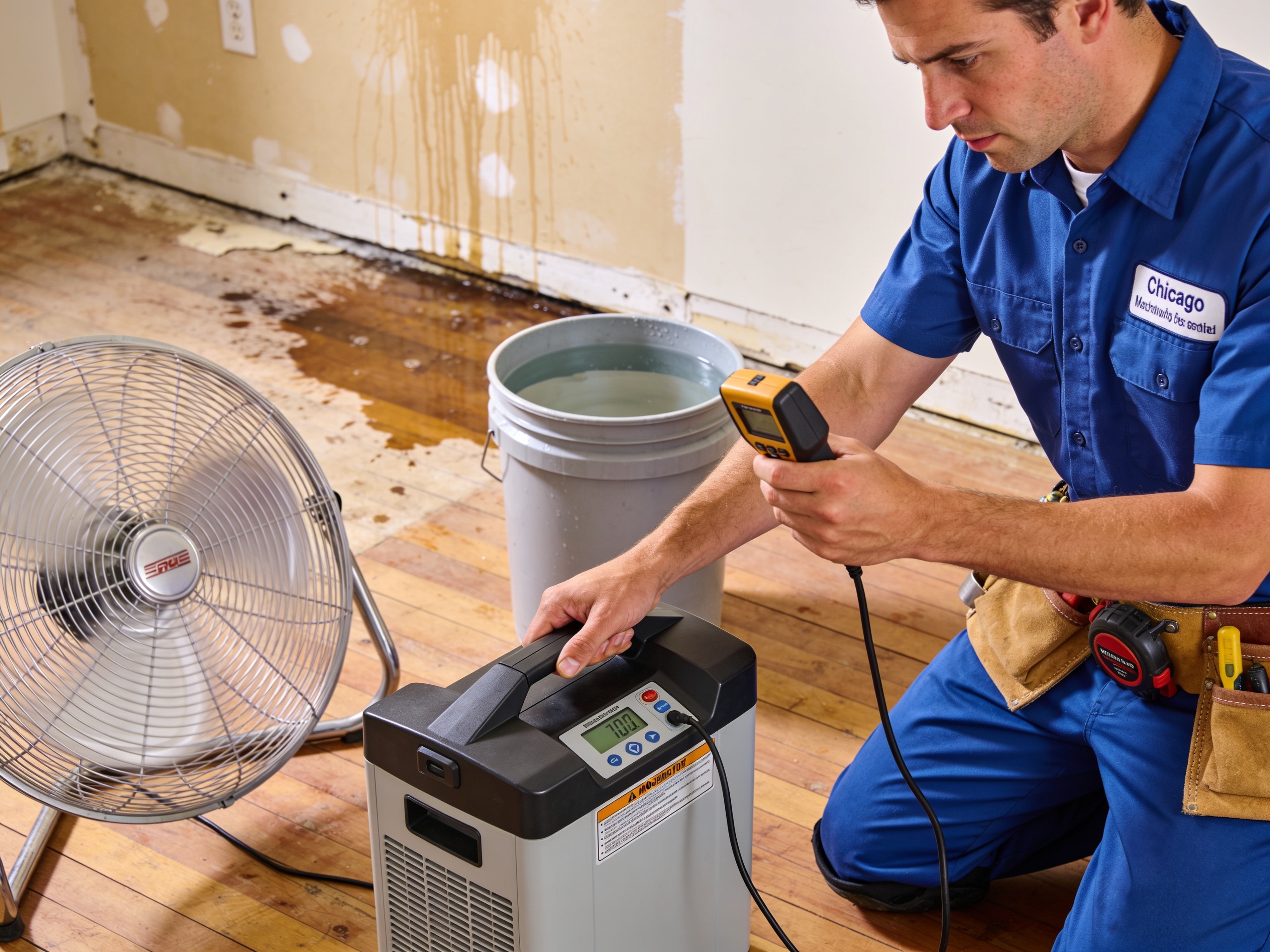
Chicago's humid continental climate brings cold winters that freeze pipes in pre-war buildings common in Logan Square and Andersonville. Older clay sewer lines and cast-iron stacks crack when temperatures swing, sending water into plaster walls and hardwood floors. Technicians must open ceilings and remove saturated lath without damaging the remaining historic finishes that many Lincoln Park and Hyde Park homes still contain.
Summer storms dump heavy rain on flat roofs and through basement windows in South Loop and Bridgeport row houses. Water migrates along party walls into neighboring units, so containment barriers and moisture mapping become essential before any drying equipment is placed. Crews track humidity levels room by room because Chicago code requires documented drying logs when insurance carriers are involved.
Evanston and Oak Park border properties often sit on clay-heavy soil that holds water against foundations for weeks. Sump pump failures during power outages after a storm create recurring seepage that only stops after exterior grading corrections and interior perimeter drains are installed. Every job starts with a moisture meter survey of joists and subfloors to prevent hidden mold growth behind cabinets and under stairs.
Technician insight
In Chicago, the thing that catches most people out with Water Damage Repair is how quickly water travels through the balloon-framed walls of 1920s buildings in neighborhoods like Wicker Park and Uptown. One small leak behind a tub can soak studs two floors down before anyone notices, and the clay soil around foundations in Rogers Park keeps everything wet longer than newer suburbs.
Frozen Pipe in Logan Square Two-Flat
A supply line froze and burst in the second-floor bathroom of a 1928 brick two-flat. Water traveled down interior walls into the first-floor unit and saturated the oak floors. Crews opened the walls, extracted water, and ran drying equipment for five days before replacing plaster and refinishing the floors to match the rest of the home.
Water Damage Repair Services We Offer
✓Burst Pipe Water Extraction
Rapid removal of standing water from kitchens and bathrooms after supply line failures in older Chicago plumbing.
✓Basement Seepage Repair
Address foundation cracks and clay soil drainage issues common in Logan Square and Pilsen homes after heavy rain.
✓Ceiling Leak Restoration
Dry out and replace water-damaged plaster or drywall from roof or upstairs plumbing leaks in multi-unit buildings.
✓Appliance Leak Cleanup
Contain and extract water from washing machine or water heater failures before it spreads to adjacent rooms.
✓Winter Freeze Damage Repair
Repair and dry areas affected by frozen pipes in unheated spaces during Chicago's cold snaps.
Water Damage Repair Cost in Chicago, IL
| Service | Typical Range | What Affects It |
|---|---|---|
| Initial inspection and moisture mapping | $125–$250 | Often credited toward repairs in Cook County jobs |
| Water extraction per room | $300–$650 | Varies with depth and whether subfloor is involved |
| Full drying package (equipment + monitoring) | $800–$2,200 | Based on number of days needed in older brick homes |
| Drywall and trim replacement | $450–$1,800 | Depends on linear footage and finish level |
Ranges are typical for Chicago, IL and confirmed with an exact written quote before any work starts.
How it works
- 1
On-Site Assessment
Technician arrives with moisture meters and thermal imaging to map affected areas in the specific Chicago building type.
- 2
Water Removal
Extract standing water using pumps and vacuums sized for the volume found in basements or multi-story homes.
- 3
Drying and Dehumidification
Place air movers and dehumidifiers, then monitor daily until readings meet industry standards for the structure.
- 4
Repairs and Restoration
Replace damaged drywall, flooring, and trim with materials matched to the home's age and neighborhood style.
Pricing
Upfront quotes after inspection; final cost depends on water volume, affected square footage, and materials required.