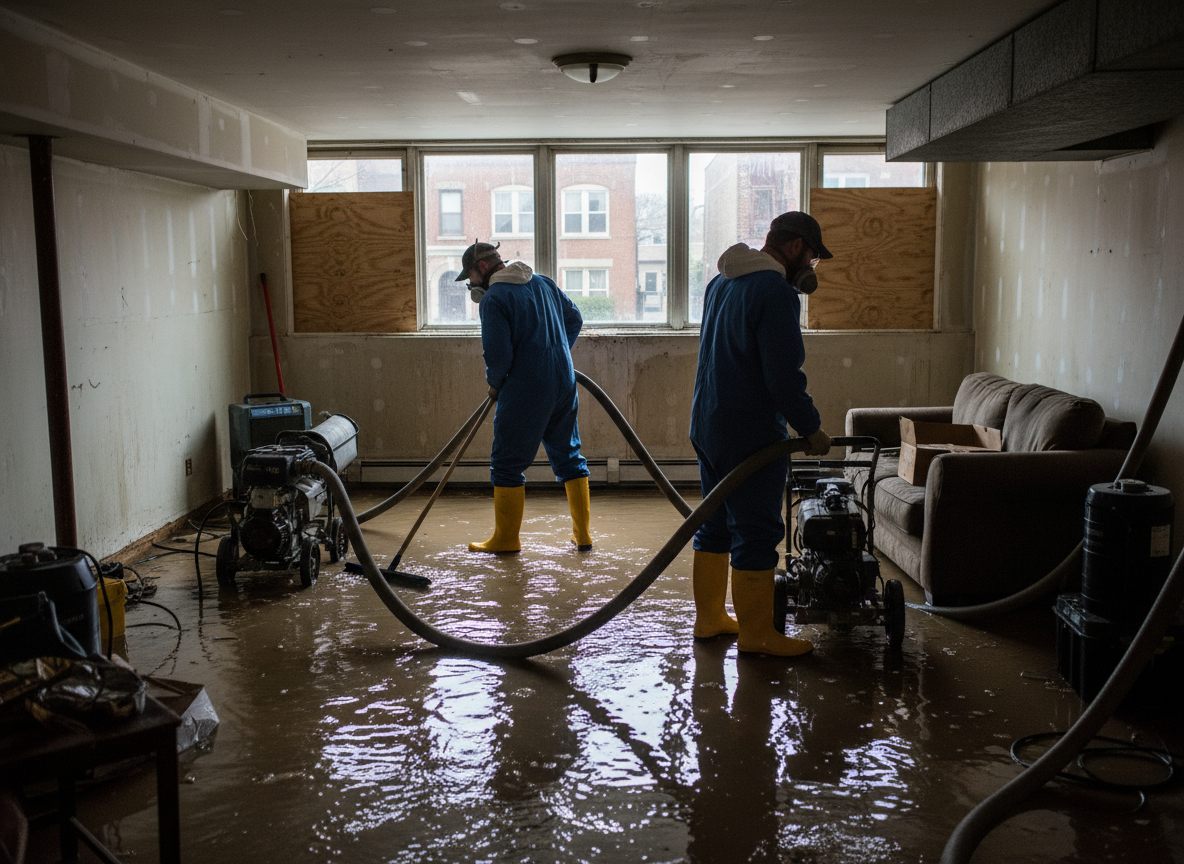
Chicago's humid continental climate brings heavy summer downpours and rapid snowmelt that overwhelm combined sewers, pushing water into basements across older brick two-flats and bungalows in Wicker Park, Logan Square, and Bridgeport. Clay-heavy soil and flat lots slow drainage, so standing water often reaches finished lower levels within hours. We extract water, set up drying equipment, and remove saturated drywall and insulation before mold sets in behind plaster walls common in pre-1940s stock.
Many homes in Lincoln Park, Hyde Park, and Rogers Park sit on combined sewer lines that back up during intense storms, carrying contaminants that require full disinfection rather than simple drying. Flat roofs and aging downspouts in West Loop and South Loop buildings channel water directly against foundations when gutters clog with lake-effect snow or leaves. We document moisture readings room by room and coordinate with insurance adjusters familiar with Cook County claims.
After extraction we run commercial air movers and dehumidifiers calibrated for Chicago winters when indoor humidity spikes from sealed windows. We also handle secondary damage like warped hardwood floors in Andersonville greystones and ruined electrical in Pilsen walk-ups where knob-and-tube wiring is still present. Every job ends with a final walkthrough so homeowners see dry readings before we leave.
Work in Evanston and Oak Park follows the same protocols but often involves larger lots with detached garages that flood from poor grading toward the house. We schedule around limited parking on narrow side streets in Uptown and Lakeview so equipment trucks do not block neighbors.
Technician insight
In Chicago the thing that catches most people out with Flood Damage Restoration is how quickly water travels through the clay soil and under the brick foundations of pre-1920s two-flats in neighborhoods like Wicker Park and Bridgeport; a small street flooding event can push water up through floor drains and under finished floors before homeowners notice.
Wicker Park Two-Flat Basement
Heavy rain overwhelmed the combined sewer on a narrow side street. Water entered through the floor drain and wicked into the finished lower level of the 1890s brick building. We extracted the water, removed baseboards and lower drywall, and ran drying equipment for four days until readings dropped below 12 percent. The homeowner kept the original hardwood subfloor after targeted repairs.
Flood Damage Restoration Services We Offer
✓Basement Flood Extraction
Remove standing water from Chicago basements after storms or sewer backups using truck-mounted pumps suited for narrow gangways in Wicker Park and Logan Square.
✓Sewage Backup Cleanup
Full removal and disinfection of contaminated water from combined sewer overflows common in older Cook County homes in Bridgeport and Pilsen.
✓Storm Water Drying
Industrial drying and dehumidification after heavy rains that pool against foundations in flat lots throughout Lincoln Park and Rogers Park.
✓Flooded Finished Basement Restoration
Strip and replace saturated drywall, insulation, and flooring in lower levels of greystones and two-flats hit by Chicago's summer cloudbursts.
✓Post-Flood Mold Prevention
Apply antimicrobial treatments and run sustained drying to stop mold growth behind plaster walls in pre-war buildings across Hyde Park and Andersonville.
✓Contents Drying and Cleaning
Move, dry, and sanitize furniture, rugs, and personal items damaged by flood water in South Loop and Uptown apartments.
Flood Damage Restoration Cost in Chicago, IL
| Service | Typical Range | What Affects It |
|---|---|---|
| Emergency Water Extraction | $600–$1,400 | Higher for multi-level or sewage-contaminated jobs in older buildings |
| Full Basement Drying Package | $900–$2,200 | Depends on square footage and length of drying time required |
| Sewage Backup Remediation | $1,200–$3,000 | Includes disinfection; price rises with finished basement square footage |
| Contents Drying And Cleaning | $350–$850 | Based on volume of items and extent of contamination |
Ranges are typical for Chicago, IL and confirmed with an exact written quote before any work starts.
How it works
- 1
Emergency Assessment
Arrive at the Chicago address, locate the water source, and test moisture levels in affected rooms.
- 2
Water Extraction
Pump out standing water and remove heavily saturated materials that cannot be saved.
- 3
Drying And Dehumidification
Place air movers and dehumidifiers sized for the space and monitor daily until dry readings are reached.
- 4
Sanitizing And Restoration
Disinfect surfaces, replace removed materials, and complete final moisture checks before turnover.
Pricing
Pricing varies by water volume, affected square footage, and whether sewage is involved; we provide upfront quotes after inspection.