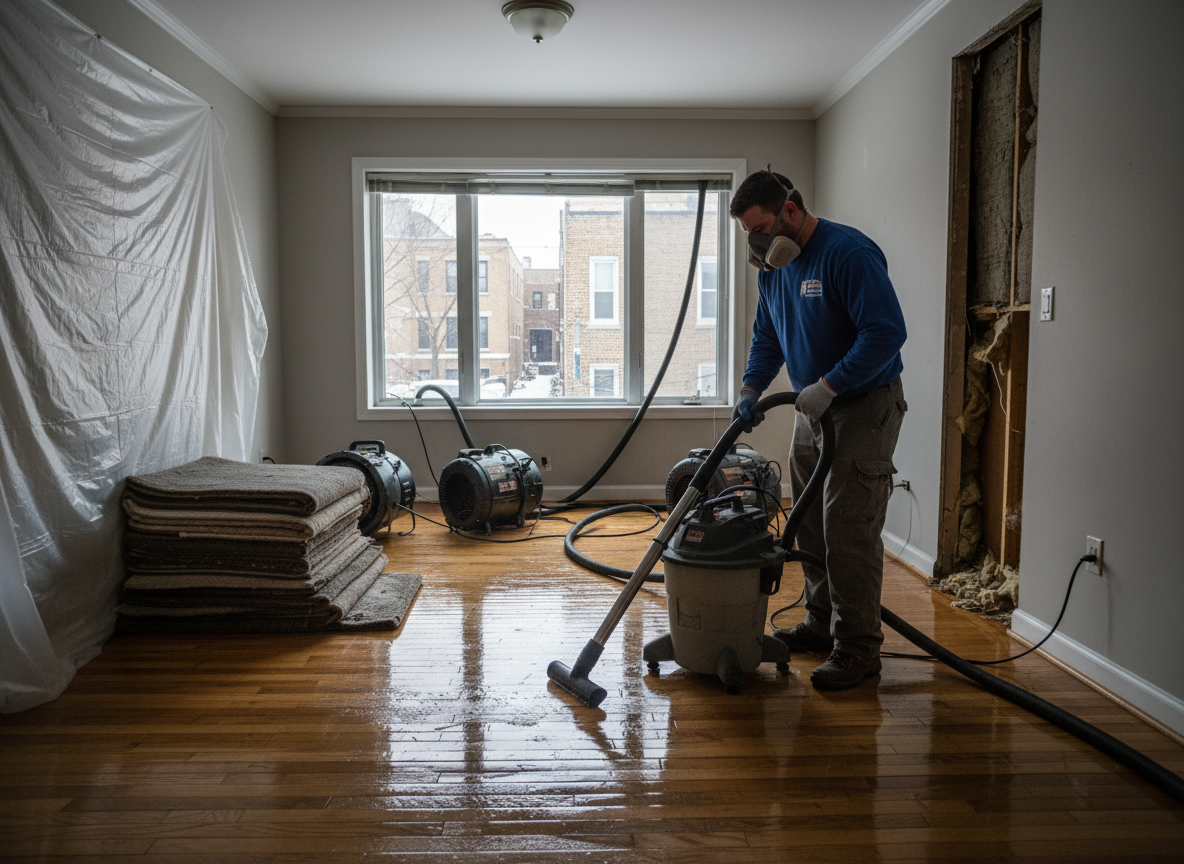
Chicago's older brick and frame homes in neighborhoods like Wicker Park, Logan Square and Bridgeport often have plaster walls, balloon framing and finished basements that trap moisture after leaks. Winters bring pipe bursts when temperatures drop below freezing, while summer storms send water through flat roofs and poor grading around the Chicago River and Lake Michigan. We start every job by locating the source, then use moisture meters on lath and plaster rather than drywall to find hidden saturation that standard fans miss.
Clay-heavy soil in Cook County slows drainage, so water sits against foundations in Hyde Park, South Loop and Rogers Park for days after heavy rain. This forces us to pull baseboards early and run air movers at floor level instead of ceiling height. We also check for asbestos in pre-1980 homes common in Uptown and Andersonville before any demolition, and we coordinate with Evanston and Oak Park code rules when the job crosses city lines.
After extraction we document every step for insurance adjusters who know Chicago's humid continental swings create secondary mold within 48 hours in summer. Our drying plans account for the fact that many Logan Square and West Loop row houses share walls, so we contain airflow to avoid pushing moisture into a neighbor's unit. Final clearance testing confirms drywall and subfloors are back to acceptable moisture levels before we close the walls.
We rebuild using materials that match the original construction—three-coat plaster where needed and moisture-resistant subfloor in kitchens and baths. Every project ends with a walkthrough so homeowners see exactly where water traveled and what was replaced.
Technician insight
In Chicago the thing that catches most people out with residential water damage restoration is how quickly moisture moves through balloon-framed walls in 100-year-old homes in Wicker Park and Logan Square; if you only dry the basement you will still have hidden saturation upstairs by the next cold snap.
Winter Pipe Burst In Logan Square Two-Flat
A second-floor copper line froze during a January cold snap and leaked through two ceilings into the first-floor unit. We found saturated plaster extending into the shared party wall and running down to the joist pockets. After extraction and targeted drying we replaced the affected plaster, reinsulated the line, and verified moisture levels before the owners moved furniture back in.
Residential Water Damage Restoration Services We Offer
✓Basement Water Extraction
Remove standing water from Chicago basements after storms or pipe failures using submersible pumps sized for older clay-tile drains.
✓Ceiling and Wall Drying
Targeted drying of plaster and lath in Lincoln Park and Lakeview homes where moisture travels upward through balloon framing.
✓Burst Pipe Restoration
Full repair and rebuild after winter freezes in Wicker Park and Logan Square, including copper line replacement and matching trim.
✓Mold Remediation After Flooding
Containment and removal of mold that grows quickly in humid summers inside South Loop and Hyde Park row houses.
✓Slab Leak Detection and Repair
Locate and fix leaks under concrete slabs common in 1920s Bridgeport and Pilsen homes without unnecessary floor removal.
Residential Water Damage Restoration Cost in Chicago, IL
| Service | Typical Range | What Affects It |
|---|---|---|
| Initial Assessment And Moisture Mapping | $125–$225 | Higher when multiple floors or finished basements require testing. |
| Water Extraction Per Room | $300–$650 | Varies with water depth and debris in older Chicago drains. |
| Equipment Rental Per Day | $150–$350 | Number of air movers and dehumidifiers needed for plaster walls. |
| Plaster Wall Repair After Drying | $400–$900 | Three-coat work and matching texture in pre-war homes. |
Ranges are typical for Chicago, IL and confirmed with an exact written quote before any work starts.
How it works
- 1
On-Site Assessment
We arrive at your Chicago address, map all affected rooms with moisture meters, and note construction details typical of the neighborhood.
- 2
Water Removal
Pumps and extraction tools pull standing water while we protect shared walls in attached homes.
- 3
Drying And Monitoring
Air movers, dehumidifiers and daily readings continue until plaster and flooring reach safe levels.
- 4
Restoration And Rebuild
Replace damaged materials, match original finishes, and perform final clearance testing before we leave.
Pricing
Most residential jobs start with an assessment visit; final cost depends on square footage, how many rooms are involved, and whether plaster or hardwood must be replaced.