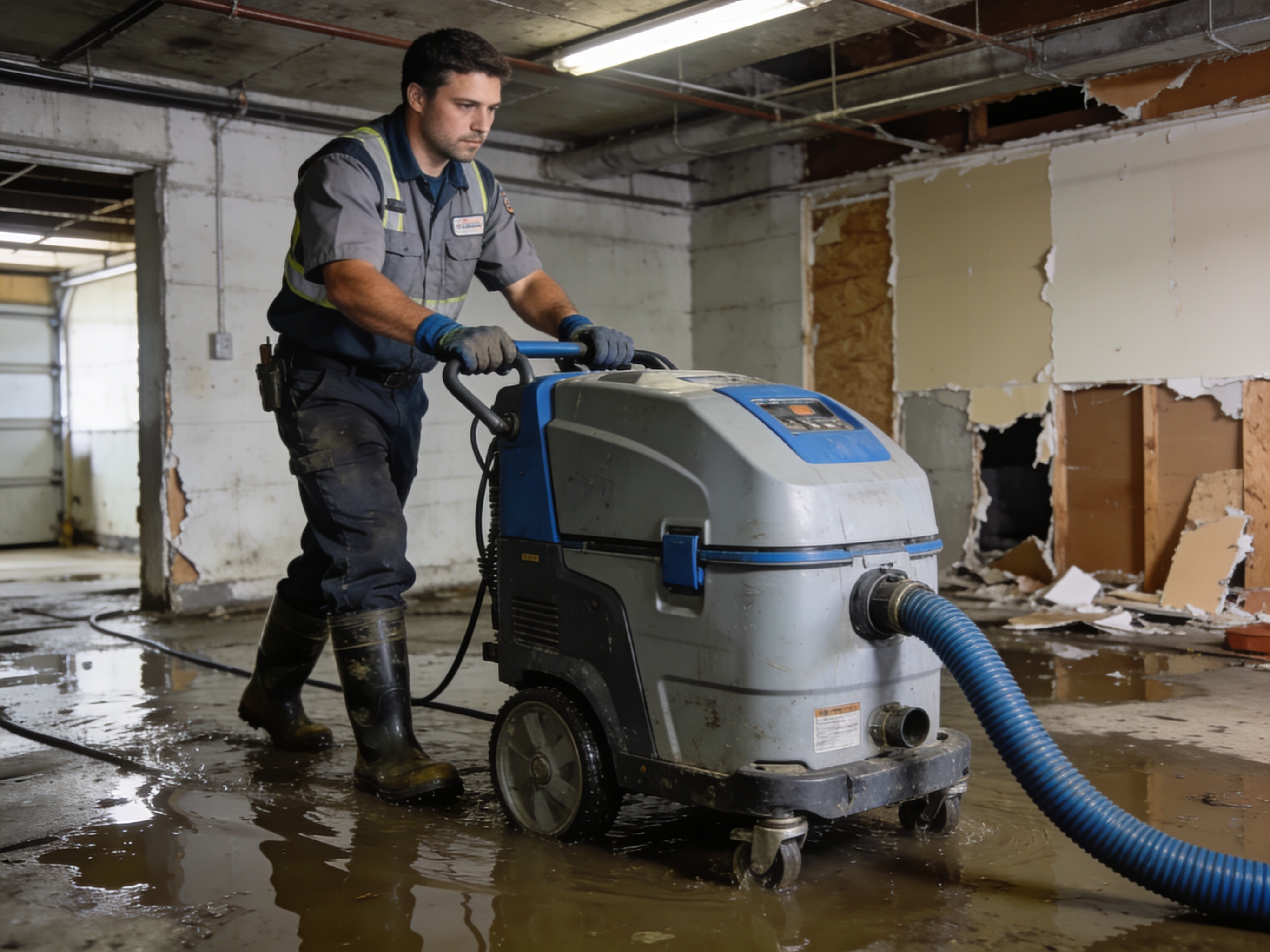
Chicago's humid continental climate brings heavy summer thunderstorms and sudden winter thaws that overload older combined sewers, especially in neighborhoods like Logan Square and Bridgeport where many homes predate 1920. These buildings often sit on limestone foundations with partial basements that trap water against plaster and lath walls. Extraction crews must pull water before it migrates into joist bays or reaches the Chicago Riverwalk low-lying zones.
In Wicker Park and West Loop conversions, finished lower levels with engineered flooring hide water under subfloors. Technicians use truck-mounted pumps and submersible units sized for the narrow gangways common on these blocks. Failure to reach hidden pockets behind brick party walls leads to mold within days once humidity spikes again.
Evanston and Oak Park border properties share the same glacial clay soils that slow drainage after heavy rain. Extraction here frequently requires removing baseboards and drilling weep holes in plaster to release trapped moisture before dehumidification begins. Crews based at 2924 W Armitage Ave respond within the posted Mon–Fri 8am–6pm and Sat 9am–2pm window to limit secondary damage in these tight urban lots.
Technician insight
In Chicago, the thing that catches most people out with water extraction is how quickly water travels through the old brick party walls in neighborhoods like Wicker Park and Hyde Park once a pipe bursts during a January freeze. The clay soil under many Logan Square and Uptown homes keeps the water sitting instead of draining away, so you have to keep pumping longer than the homeowner expects.
Burst Pipe in Logan Square Two-Flat
A cold snap froze supply lines on the second floor of a 1912 two-flat. Water migrated down through plaster walls into the first-floor unit and basement. Extraction removed standing water from the basement slab and pulled saturated carpet pad before it reached the joists. The job finished before mold could start in the humid summer air that followed.
Water Extraction Services Services We Offer
✓Basement Water Extraction
Removes standing water from Chicago basements after sewer backups or storms, protecting limestone foundations common in Pilsen and Bridgeport.
✓Carpet and Pad Water Removal
Extracts water from wall-to-wall carpet and padding in older Lincoln Park and Lakeview apartments before mold sets into the jute backing.
✓Crawl Space Water Extraction
Drains shallow crawl spaces under frame homes in Rogers Park and Andersonville where clay soil keeps moisture trapped against sill plates.
✓Appliance Leak Extraction
Handles sudden water releases from refrigerators, washers or water heaters in compact West Loop and South Loop units with limited access.
✓Storm Flood Extraction
Clears rainwater and street flooding from lower levels near Grant Park and the Chicago Riverwalk after heavy summer downpours.
Water Extraction Services Cost in Chicago, IL
| Service | Typical Range | What Affects It |
|---|---|---|
| Basement Water Extraction | $600–$1,800 | Higher in pre-1920 homes with narrow gangways or multiple levels |
| Carpet And Pad Extraction | $250–$650 | Depends on square footage and whether padding is glued down |
| Crawl Space Extraction | $450–$1,200 | Clay soil and low clearance increase time on site |
| After-Hours Emergency Extraction | $150–$400 added | Applies outside Mon–Fri 8am–6pm and Sat 9am–2pm |
Ranges are typical for Chicago, IL and confirmed with an exact written quote before any work starts.
How it works
- 1
On-Site Assessment
Technician inspects water depth, source and affected materials in the specific Chicago neighborhood home.
- 2
Water Removal
Truck-mounted and portable pumps extract standing water while protecting adjacent plaster and hardwood.
- 3
Hidden Moisture Check
Moisture meters locate trapped water behind walls and under floors typical of pre-war Cook County construction.
- 4
Final Extraction And Documentation
Remaining water is pulled and photos taken for insurance before drying equipment is placed.
Pricing
Pricing varies by water volume, access constraints in older buildings and whether work occurs after hours.