2026-11-14 · Mike Sullivan
Preventing Burst Pipes in Chicago Winters
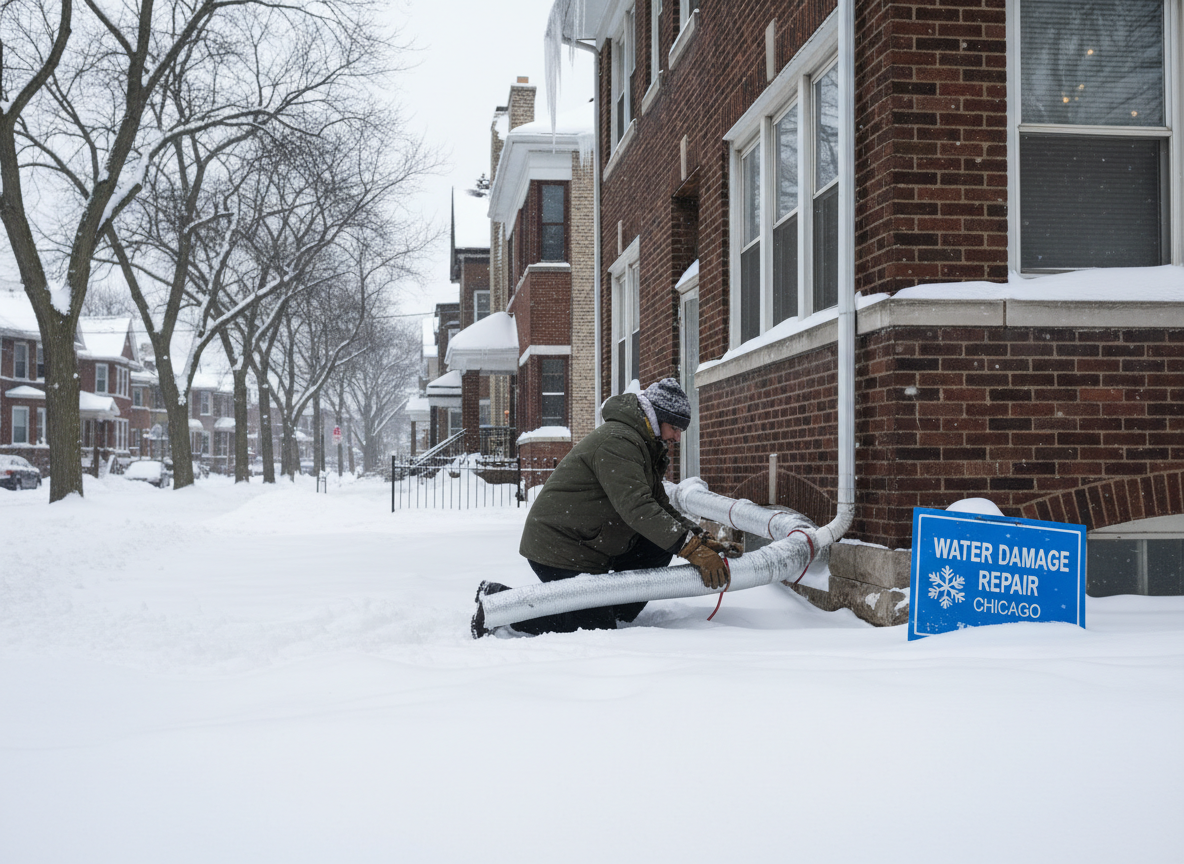
Chicago winters with temperatures frequently falling below 20°F make burst pipes a common issue in homes built before 1960. Start by keeping indoor temperatures above 55°F even when away, insulating exposed pipes in basements and crawl spaces, and shutting off outdoor spigots before the first hard freeze.
Chicago Winter Climate and Pipe Vulnerabilities
The region's humid continental climate delivers prolonged cold snaps that penetrate older brick and frame homes common in Lincoln Park, Logan Square and Bridgeport. Many properties in these areas still rely on galvanized steel or early copper lines installed 50 to 80 years ago that lose flexibility when water inside them freezes and expands. Unheated areas under porches or near single-pane windows in Wicker Park and Uptown amplify the problem because wind off Lake Michigan accelerates heat loss. South Loop and West Loop conversions often leave pipes in exterior walls with minimal insulation, turning a single night below zero into a rupture that floods multiple floors.
Identifying High-Risk Locations in Local Homes
Focus first on pipes running along exterior walls in kitchens and bathrooms of pre-war buildings in Andersonville and Rogers Park. Check the main water line entering through the foundation in Pilsen and Bridgeport row houses where soil shifts from freeze-thaw cycles can stress joints. In Hyde Park and Hyde Park-adjacent areas, look at attic supply lines that lack sufficient batt insulation. Homeowners near the Chicago Riverwalk or Grant Park often discover that wind-driven cold reaches interior chases faster than expected, so a visual inspection every fall is essential.
Practical Insulation and Heat Strategies
Wrap vulnerable lines with foam pipe insulation rated for at least R-3 in unheated basements common throughout Logan Square and West Loop lofts. Install heat tape on the main incoming line in older Evanston and Oak Park homes where the water meter sits in a cold crawl space. Keep cabinet doors open under sinks during extreme cold to allow warm air circulation. Set the thermostat to a consistent 60°F minimum rather than letting it drop overnight, especially in two-flat buildings in Uptown where upper units may stay warm while lower levels cool rapidly.
Monitoring and Seasonal Maintenance Steps
Turn off and drain outdoor hoses by mid-November to prevent back-pressure on sill cocks. Check the water heater temperature setting stays between 120°F and 125°F so hot-water lines retain enough warmth to protect nearby cold lines. Walk through the property after each cold front and listen for unusual dripping sounds in walls. If a small leak appears, document the location and contact a professional for Water Damage Repair before it escalates into widespread damage.
When Prevention Fails and Next Steps
Even with precautions, a sudden drop to -10°F can still cause failures in 70-year-old lines. Shut off the main valve immediately and open faucets to relieve pressure. Document the affected rooms with photos for insurance and call for Water Damage Restoration to begin extraction and drying within hours. For cost expectations in Chicago's older housing stock, review Typical Costs for Water Damage Repair in Chicago Older Homes.
Consistent fall inspections combined with targeted insulation keep most Chicago homes in neighborhoods from Lincoln Park to Pilsen free of burst-pipe incidents throughout the season.