2026-11-14 · Mike Sullivan
Typical Costs for Water Damage Repair in Chicago Older Homes
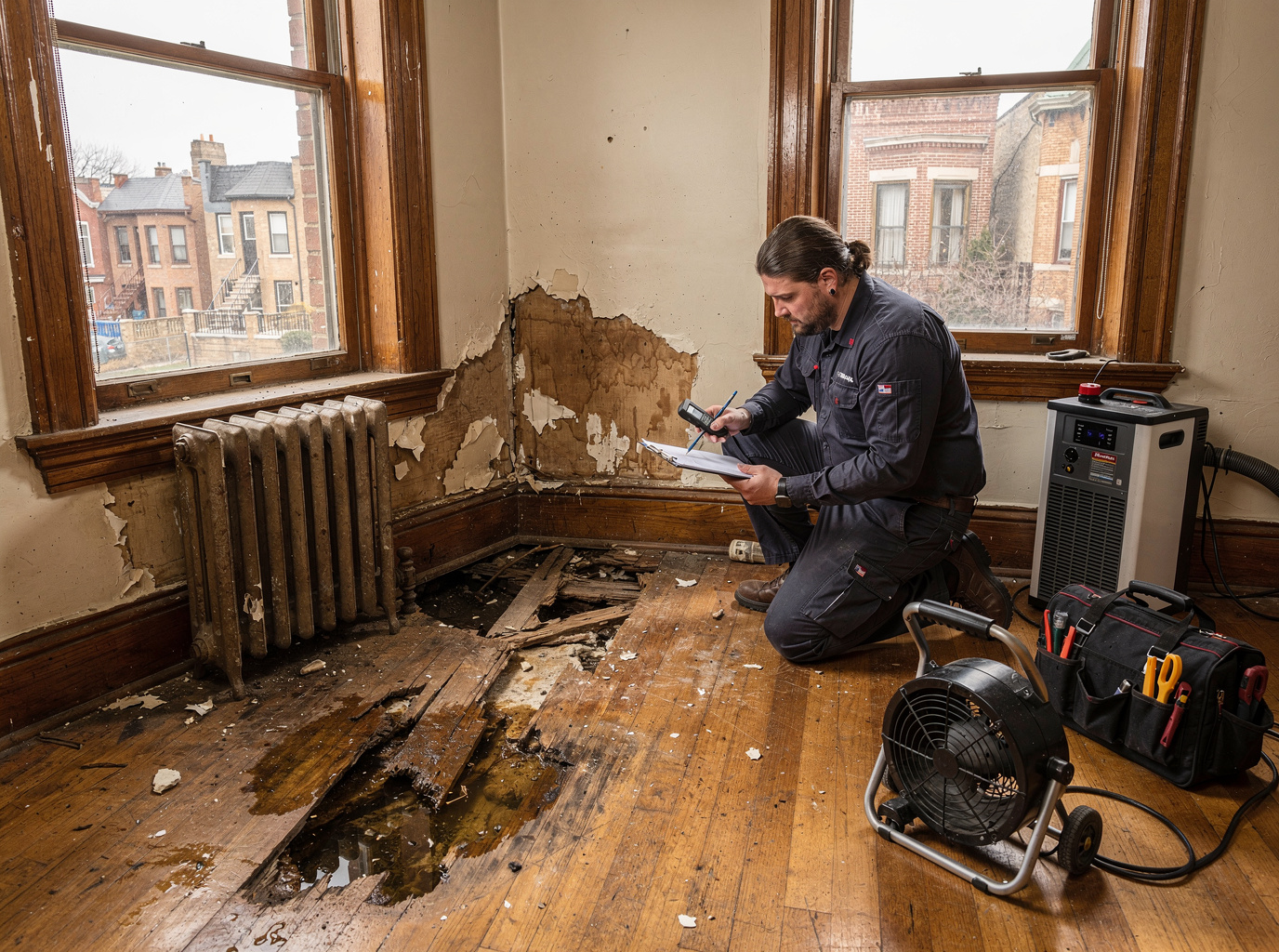
Water damage repair in Chicago older homes typically costs $800–$4,500, with minor leaks starting near $800 and full basement restorations reaching $4,500 when plaster walls, hardwood floors and outdated plumbing require replacement. These ranges reflect the realities of pre-1950s housing stock across Cook County neighborhoods like Lincoln Park, Wicker Park, Lakeview and Logan Square, where narrow lots, shared walls and shallow foundations increase labor time. Cold winters bring frozen pipes while humid continental summers deliver heavy storms that overwhelm aging downspouts and clay tile drains. Homeowners in nearby Evanston and Oak Park see similar pricing because the same construction methods and weather patterns apply. Actual totals depend on square footage affected, water category and whether mold develops before extraction begins.
Basement and Foundation Issues in Pre-1950 Homes
Many Chicago homes built before 1950 sit on rubble or early concrete foundations that crack under seasonal freeze-thaw cycles common in Cook County. Water enters through mortar joints or around window wells in neighborhoods such as Hyde Park, Bridgeport and Pilsen, where high water tables and poor grading compound the problem. Repair often requires removing finished basement walls to reach the leak, installing perimeter drains and applying waterproofing membranes. These steps add $1,200–$2,800 to the base extraction and drying bill because crews must work around original brick or lathe-and-plaster construction. In West Loop and South Loop conversions, slab-on-grade sections limit access and raise costs further when concrete must be broken out. Homeowners who address grading and extend downspouts early avoid repeat calls after the next heavy rain.
Pipe and Plumbing Repairs in Older Chicago Housing Stock
Galvanized and cast-iron supply lines installed in the 1920s through 1940s corrode from the inside and fail during winter temperature drops. A single burst in a Lincoln Park or Andersonville two-flat can flood multiple floors because stacked plumbing runs vertically through shared walls. Replacement of 20–40 linear feet of pipe plus wall opening and patching typically lands between $1,400 and $3,200. Technicians must match modern copper or PEX to existing threaded fittings while preserving original trim and hardwood. In Uptown and Rogers Park buildings with steam heat, condensate lines also fail and send water into ceilings. Linking to seasonal prevention guidance helps residents protect these systems before temperatures fall below freezing.
Drying and Restoration After Summer Storms
Chicago’s humid continental climate produces intense July and August downpours that overwhelm combined sewer systems in Logan Square, Uptown and surrounding blocks. Basements fill quickly when rain exceeds one inch per hour. Professional water extraction followed by industrial drying usually costs $900–$2,100 for a standard 800-square-foot basement, but older plaster and lath retain moisture longer than modern drywall, extending drying time by two to four days. Air movers and dehumidifiers must run continuously to prevent mold on joists and subfloors. After the 2020 derecho and repeated summer events, many owners in nearby Oak Park learned that skipping professional drying leads to hidden growth behind baseboards. The related guide on drying after Chicago summer storms outlines equipment placement for these older structures.
Cost Factors Specific to Chicago Older Homes
Square footage affected, water category (clean, gray or black) and whether contents require removal drive final pricing. Minor second-floor bathroom leaks average $800–$1,500 while category-three sewage backups in a full basement reach $3,500–$4,500 because of biohazard protocols and disposal fees. Hardwood floors in Wicker Park and Lakeview homes add $600–$1,200 for sanding and refinishing after cupping occurs. Insurance adjusters often require documentation of pre-existing wear in 80-year-old homes, which can shift out-of-pocket responsibility. Scheduling extraction the same day prevents secondary damage that doubles costs within 48 hours. Homeowners in Evanston and Oak Park report comparable line items because the housing age and Cook County soil conditions remain consistent across the region.